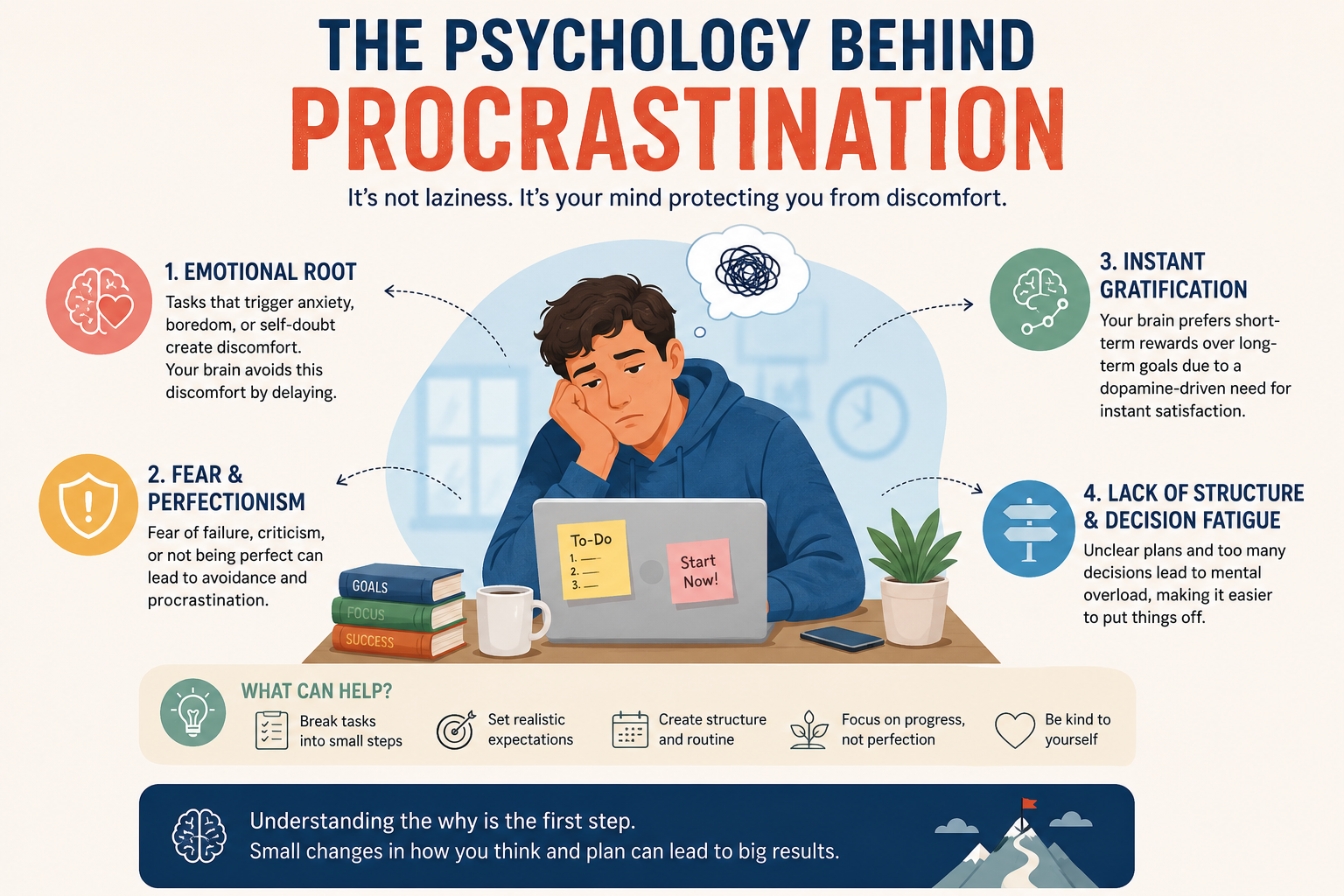
Procrastination is something almost everyone experiences at some point. Whether it’s delaying a work assignment, putting off exercise, or avoiding difficult conversations, the habit of postponing tasks can quietly shape our productivity and mental well-being. While it may seem like a simple issue of laziness or poor time management, procrastination is deeply rooted in psychology. Understanding why we procrastinate can help us overcome it more effectively.
1. The Emotional Root of Procrastination
At its core, procrastination is not about time—it’s about emotion. People often delay tasks because they trigger uncomfortable feelings such as anxiety, boredom, frustration, or self-doubt. Instead of confronting these emotions, the brain seeks immediate relief by turning to more enjoyable or less demanding activities.
This is known as emotional regulation. When faced with a task that feels overwhelming, the mind chooses short-term comfort over long-term goals. For example, scrolling through social media might provide temporary relief, but it ultimately increases stress when deadlines approach. In this way, procrastination becomes a coping mechanism rather than a productivity issue.
2. The Role of Fear and Perfectionism
Fear is another powerful driver of procrastination. Many people delay tasks because they fear failure, criticism, or even success. This fear can lead to avoidance behaviors, making it easier to postpone rather than risk making mistakes.
Perfectionism often goes hand-in-hand with this fear. When individuals set unrealistically high standards, they may feel that starting a task is pointless unless it can be done perfectly. This mindset creates a mental barrier, causing delays and increasing pressure over time. Ironically, the pursuit of perfection often results in incomplete or rushed work.
3. The Brain’s Preference for Instant Gratification
The human brain is wired to prioritize immediate rewards over future benefits. This tendency, known as temporal discounting, explains why people often choose short-term pleasures over long-term achievements.
When given a choice between working on a project or watching a video, the brain naturally leans toward the option that provides instant satisfaction. This is because dopamine, the “feel-good” chemical, is released when we engage in enjoyable activities. As a result, tasks that lack immediate rewards are more likely to be delayed.
Understanding this mechanism is crucial. It shows that procrastination is not a personal flaw but a natural tendency that can be managed with the right strategies.
4. Lack of Structure and Decision Fatigue
Procrastination can also stem from a lack of clear structure or direction. When tasks are vague or too complex, the brain struggles to decide where to begin. This leads to indecision, which often results in avoidance.
Additionally, decision fatigue plays a role. After making numerous choices throughout the day, the brain becomes mentally exhausted. This reduces the ability to focus and increases the likelihood of postponing tasks. Without a clear plan or routine, even simple tasks can feel overwhelming.
Conclusion
Procrastination is far more complex than simply being lazy or unmotivated. It is deeply tied to emotional regulation, fear, brain chemistry, and cognitive overload. By recognizing these underlying psychological factors, individuals can begin to address the root causes rather than just the symptoms. Small changes—such as breaking tasks into manageable steps, setting realistic expectations, and creating structured routines—can make a significant difference. Ultimately, overcoming procrastination is about understanding yourself better and building habits that align with both your goals and your mental well-being.