Solo travel is one of the most empowering and life-changing experiences you can have. It allows you to explore the world at your own pace, discover new cultures, and build confidence. However, traveling alone also comes with unique challenges—especially when it comes to safety. For beginners, understanding how to stay safe while enjoying the journey is essential. This guide will walk you through practical tips to help you travel solo with confidence and peace of mind.
1. Plan Ahead and Do Your Research
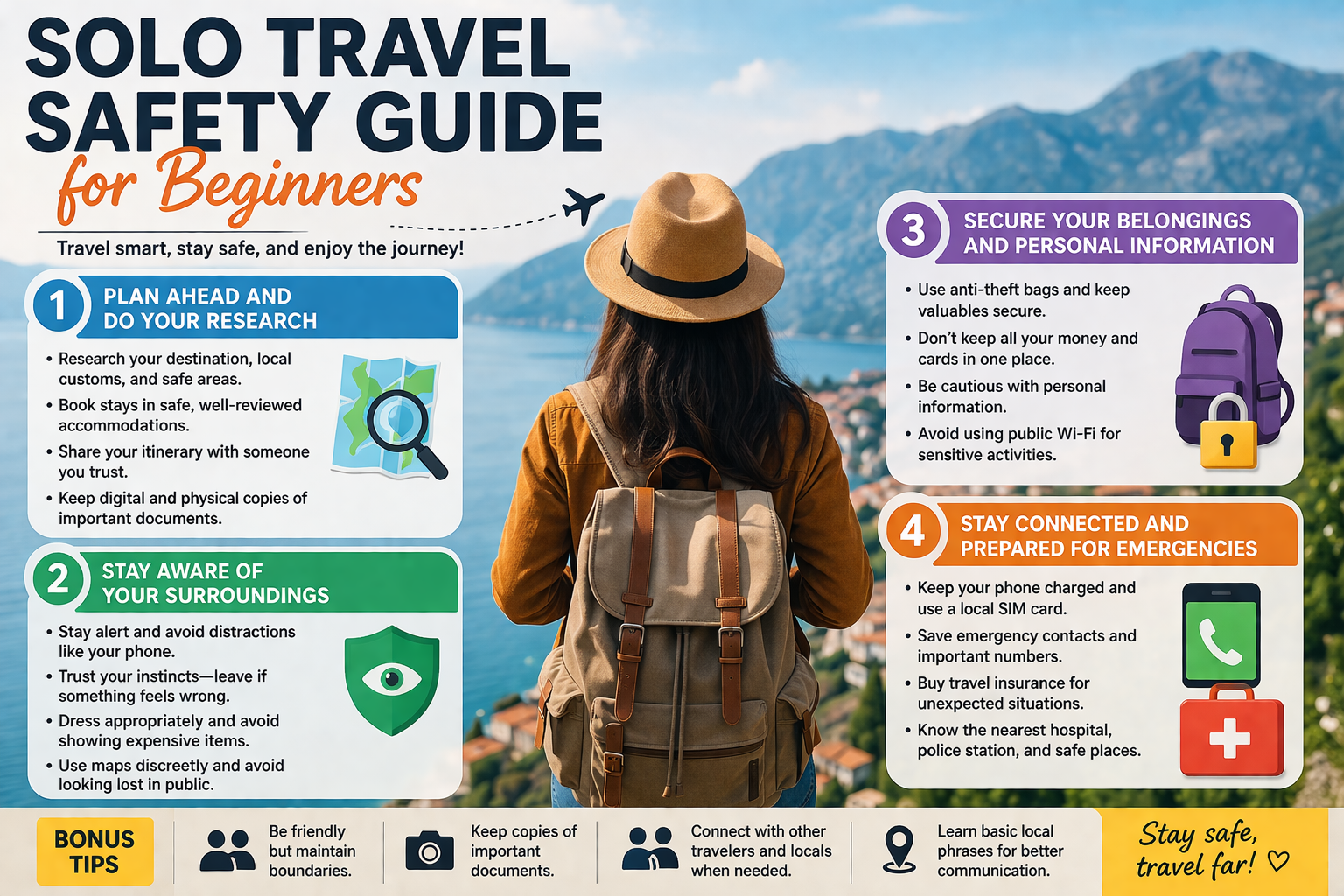
Before you even pack your bags, thorough planning is key to a safe solo trip. Start by researching your destination—learn about local customs, cultural norms, and any areas that may be unsafe for tourists. Understanding basic phrases in the local language can also be incredibly helpful in emergencies.
Make sure to book accommodations in safe and well-reviewed areas. Look for hotels or hostels with strong security measures such as 24/7 reception, secure locks, and good lighting. It’s also wise to share your travel itinerary with a trusted friend or family member. Let them know your plans, including where you’ll be staying and how to contact you.
Additionally, keep digital and physical copies of important documents like your passport, visa, travel insurance, and identification. In case of loss or theft, having backups can save you a lot of trouble.
2. Stay Aware of Your Surroundings
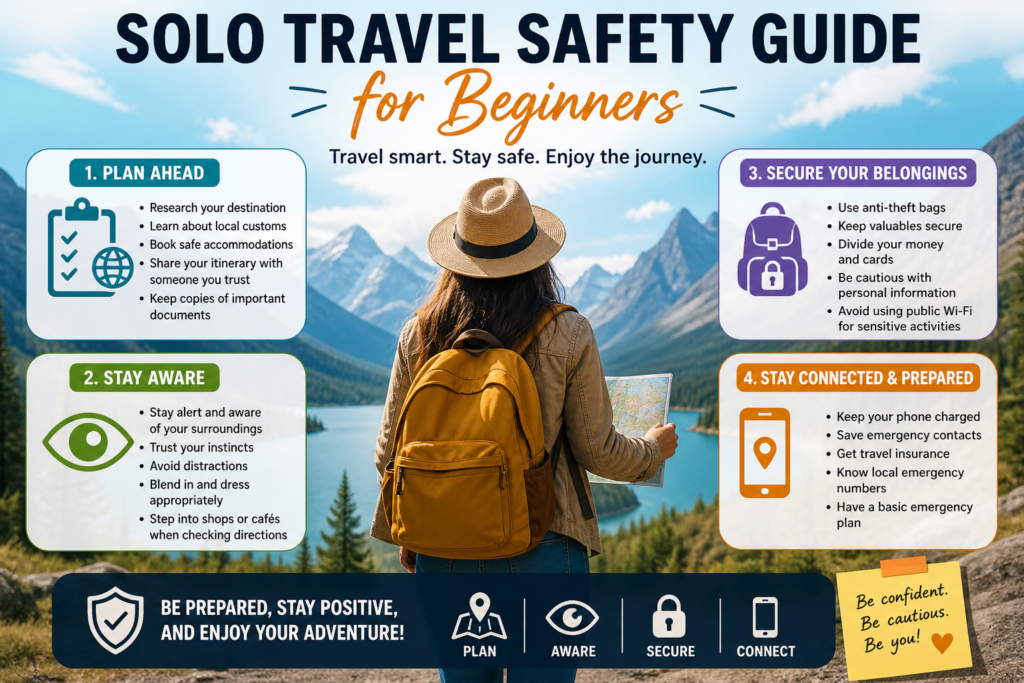
One of the most important habits for solo travelers is staying alert. Avoid distractions like constantly looking at your phone while walking in unfamiliar areas. Pay attention to your surroundings, especially in crowded places like markets, public transport, or tourist attractions.
Trust your instincts—if something feels off, don’t ignore that feeling. It’s better to leave a situation early than to risk your safety. Try to blend in with the locals as much as possible by dressing appropriately and not displaying expensive items like jewelry or gadgets.
When using maps or directions, step into a shop or café instead of standing in the middle of the street looking lost. This reduces the chance of attracting unwanted attention. Being aware doesn’t mean being paranoid—it simply means being mindful and cautious.
3. Secure Your Belongings and Personal Information
Keeping your belongings safe is crucial when traveling alone. Use anti-theft backpacks or bags with hidden zippers and compartments. Carry only what you need for the day and leave valuables in your accommodation’s safe when possible.
Avoid keeping all your money and cards in one place. Instead, divide them into different pockets or bags. This way, even if something gets stolen, you won’t lose everything at once. Using a money belt can also add an extra layer of security.
Be cautious when sharing personal information with strangers. While meeting new people is part of the travel experience, it’s important to maintain boundaries. Avoid revealing details like your hotel room number or full travel plans to people you’ve just met.
Public Wi-Fi networks can also be risky. Avoid accessing sensitive information such as banking apps unless you’re using a secure connection or a VPN.
4. Stay Connected and Prepared for Emergencies
Being connected is essential for safety during solo travel. Make sure your phone is always charged and consider carrying a portable power bank. Having a local SIM card or an international roaming plan ensures you can make calls or access maps when needed.
Save emergency contact numbers, including local police, ambulance services, and your country’s embassy. Many countries also have travel safety apps that provide real-time alerts and assistance.
Travel insurance is another must-have. It can cover unexpected situations such as medical emergencies, trip cancellations, or lost belongings. Knowing you have backup support can make a big difference in stressful situations.
Finally, always have a basic emergency plan. Know the nearest hospital, police station, and safe places near your accommodation. Being prepared doesn’t mean expecting the worst—it means being ready just in case.
Conclusion
Solo travel is a rewarding experience that offers freedom, self-discovery, and unforgettable memories. While safety concerns are natural—especially for beginners—they shouldn’t stop you from exploring the world. By planning ahead, staying aware, securing your belongings, and being prepared for emergencies, you can significantly reduce risks and travel with confidence. The key is to strike a balance between caution and curiosity. With the right mindset and precautions, solo travel can be not only safe but also one of the most enriching adventures of your life.