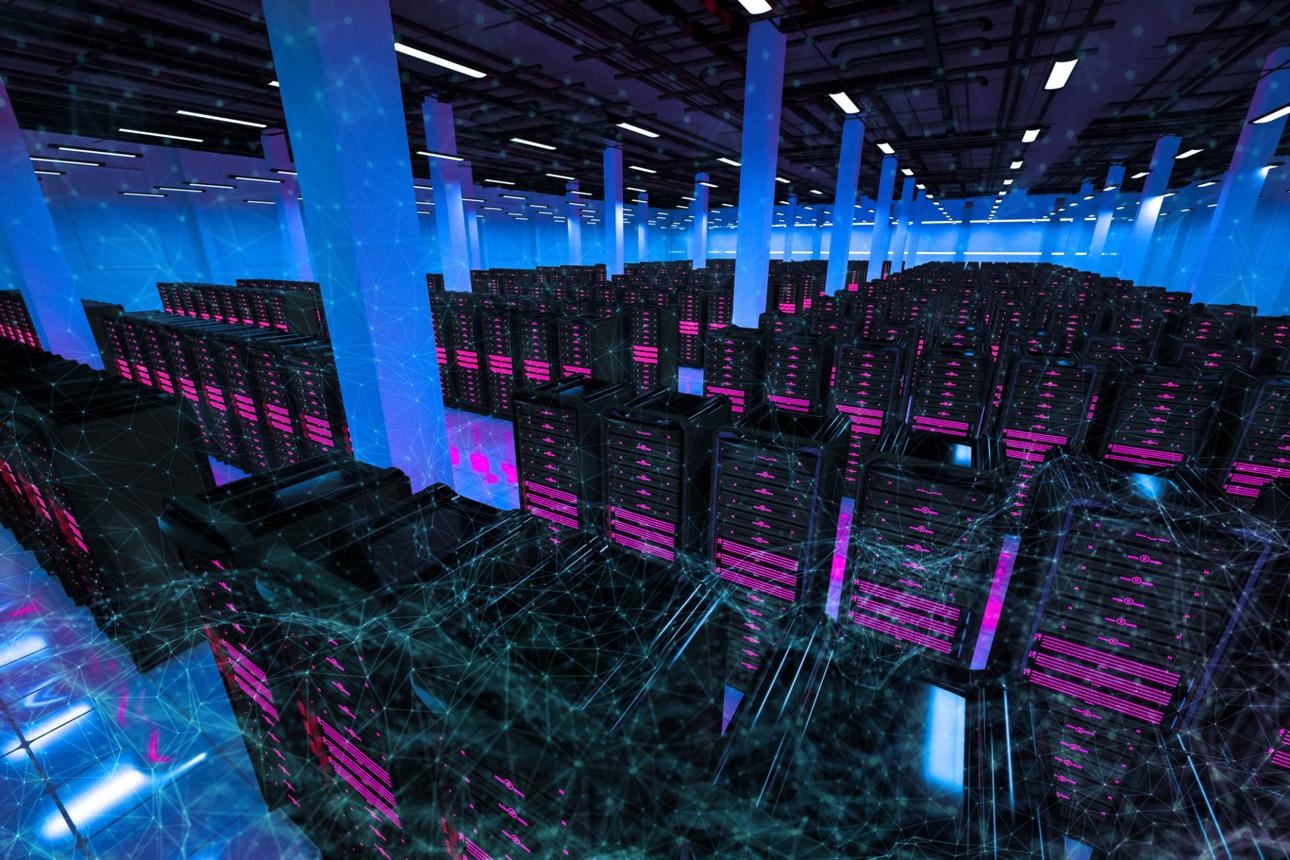
The artificial intelligence revolution is no longer just about creating smarter models—it has become a global race to build the physical infrastructure that powers them. Governments, cloud providers, semiconductor companies, and investors are pouring hundreds of billions of dollars into AI-focused data centers, high-performance computing clusters, advanced networking systems, and energy infrastructure. The competition to secure AI leadership is rapidly reshaping the global technology landscape.
AI’s New Battleground: Compute Power
Over the last few years, AI development has increasingly depended on access to massive computing resources. Training and running advanced AI models requires enormous amounts of processing power, storage, networking bandwidth, and electricity.
Industry analysts estimate that the world’s largest cloud providers will spend more than $710 billion on infrastructure in 2026 alone, with much of that investment dedicated to AI-related workloads. Companies such as Google, Microsoft, Amazon, Meta, Oracle, Alibaba, and Tencent are aggressively expanding their data center footprints to meet surging demand.


Tech Giants Commit Record Investments
Major technology companies are announcing unprecedented capital expenditure plans focused on AI infrastructure.
- Meta has discussed investing hundreds of billions of dollars into compute infrastructure to support future AI systems and superintelligence initiatives.
- Google, Amazon, Microsoft, and Meta together are expected to invest hundreds of billions of dollars in AI-related infrastructure during 2026.
- Broadcom, Apollo, and Blackstone recently launched a $35 billion AI infrastructure platform designed to provide more than 20 gigawatts of AI compute capacity by 2028.
This spending reflects a broader shift in the AI industry. Success is no longer determined solely by algorithms; access to large-scale compute resources has become a critical competitive advantage.
Governments Enter the AI Race
The competition extends beyond private companies. National governments increasingly view AI infrastructure as a strategic asset linked to economic growth, technological sovereignty, and national security.
China is reportedly preparing a five-year plan worth approximately $295 billion to build a nationwide network of AI-focused data centers. The initiative aims to strengthen domestic AI capabilities while reducing reliance on foreign technologies.
Meanwhile, countries across Europe, Asia, and the Middle East are launching sovereign AI initiatives designed to establish domestic computing capacity and support local AI ecosystems.
India’s Ambitious AI Infrastructure Expansion
India is emerging as a significant player in the global AI infrastructure race. One of the largest announcements came from the Adani Group, which pledged up to $100 billion toward AI-ready data centers over the next decade.
The initiative aims to create renewable-energy-powered facilities capable of supporting advanced AI workloads while helping position India as a global hub for AI computing services.


Energy Becomes a Critical Challenge
AI infrastructure growth is creating unprecedented demand for electricity. Modern AI data centers consume significantly more power than traditional cloud facilities because of their dense GPU deployments and intensive computational workloads.
Researchers estimate that AI-related infrastructure could account for a substantial share of future electricity demand, creating challenges for power grids worldwide. Regions hosting large concentrations of AI data centers may face grid stress unless energy generation and transmission infrastructure expand alongside compute capacity.
As a result, technology companies are increasingly investing in renewable energy projects, battery storage systems, and even nuclear power agreements to secure reliable electricity supplies for future AI operations.
The Rise of AI Factories
Industry experts are beginning to describe next-generation data centers as “AI factories.” These facilities are optimized specifically for training and deploying AI models at scale.
Unlike traditional cloud infrastructure, AI factories require:
- Massive GPU clusters
- Advanced cooling systems
- High-speed networking
- Specialized AI chips
- Dedicated energy sources
Governments and enterprises increasingly view these facilities as strategic national assets that will underpin future economic competitiveness.
Why This Race Matters
The AI infrastructure boom is about much more than technology. The nations and companies that control compute capacity may gain advantages across industries including healthcare, finance, manufacturing, defense, education, and scientific research.
The race also influences semiconductor supply chains, labor markets, energy policy, and global investment flows. Experts predict that trillions of dollars could be invested in AI infrastructure by the end of the decade as demand for increasingly powerful AI systems continues to grow.
Conclusion
The global AI race has entered a new phase where physical infrastructure is just as important as software innovation. Tech giants are committing record levels of capital, governments are launching national AI initiatives, and investors are funding massive new compute projects around the world. From billion-dollar data centers to nationwide AI networks, the foundation of the next generation of artificial intelligence is being built today. As compute demand continues to rise, the competition for AI infrastructure is likely to become one of the defining technological and economic stories of the decade.