🚀 Introduction
Artificial Intelligence (AI) chatbots have rapidly transformed the way people communicate with technology. What once started as simple rule-based programs capable of answering basic questions has evolved into sophisticated conversational systems that can understand natural language, generate meaningful responses, assist with complex tasks, and even create content. Today, AI chatbots are becoming an essential part of customer service, education, healthcare, e-commerce, finance, software development, and countless other industries.
Modern AI chatbots are powered by advanced technologies such as Natural Language Processing (NLP), Machine Learning (ML), Large Language Models (LLMs), speech recognition, and cloud computing. These technologies allow chatbots to understand context, remember previous interactions within a conversation, analyze user intent, and provide highly personalized responses.
Businesses use AI chatbots to reduce operational costs, improve customer satisfaction, automate repetitive tasks, and provide 24/7 support. Individuals rely on AI assistants to answer questions, write emails, summarize documents, learn new skills, brainstorm ideas, and manage everyday tasks. As generative AI continues to advance, chatbots are becoming more capable collaborators rather than simple automated tools.
This comprehensive guide explores AI chatbots, how they work, their key technologies, benefits, applications across industries, challenges, best practices, and the future of conversational AI. 🌍
🤖 What Is an AI Chatbot?
An AI chatbot is a software application designed to simulate human conversation using artificial intelligence. Unlike traditional chatbots that follow predefined rules, AI chatbots learn from data and use advanced language models to generate context-aware responses.
Key capabilities include:
- 💬 Natural language conversations
- 🧠 Context awareness
- 📚 Knowledge retrieval
- ✍️ Content generation
- 🌐 Multilingual communication
- 📊 Data analysis
- 🎯 Personalized recommendations
- 🤝 Human-like interaction
AI chatbots can communicate through text, voice, or even multimedia interfaces, making them accessible across websites, mobile apps, messaging platforms, and smart devices.
🧠 How AI Chatbots Work


Modern AI chatbots combine several technologies to understand and respond effectively.
📝 Natural Language Processing (NLP)
NLP enables chatbots to understand grammar, context, intent, and meaning in human language.
🧠 Machine Learning
Machine learning algorithms improve chatbot performance by learning from data and user interactions.
🌐 Large Language Models (LLMs)
Large language models are trained on vast amounts of text, enabling them to generate coherent, contextually relevant responses across many topics.
☁️ Cloud Computing
Cloud platforms provide the computing power needed to process requests quickly and scale to millions of users.
🔄 Continuous Improvement
Developers refine chatbots through testing, user feedback, and model updates to improve accuracy and reliability over time.
💼 Business Applications of AI Chatbots
AI chatbots are helping businesses improve efficiency and customer engagement.
🛍️ Customer Support
Chatbots can answer frequently asked questions, troubleshoot common issues, and guide users through processes at any time of day.
Benefits include:
- ⏱️ Faster response times
- 😊 Improved customer satisfaction
- 💵 Lower support costs
- 🌍 24/7 availability
📢 Marketing
Marketing teams use AI chatbots to:
- Recommend products
- Capture leads
- Answer product questions
- Personalize promotions
- Support online campaigns
Interactive conversations often lead to higher engagement and conversion rates.
💼 Sales Assistance
AI chatbots help sales teams by:
- Qualifying leads
- Scheduling meetings
- Recommending products
- Answering pricing questions
- Providing product comparisons
This allows sales professionals to focus on building relationships and closing deals.
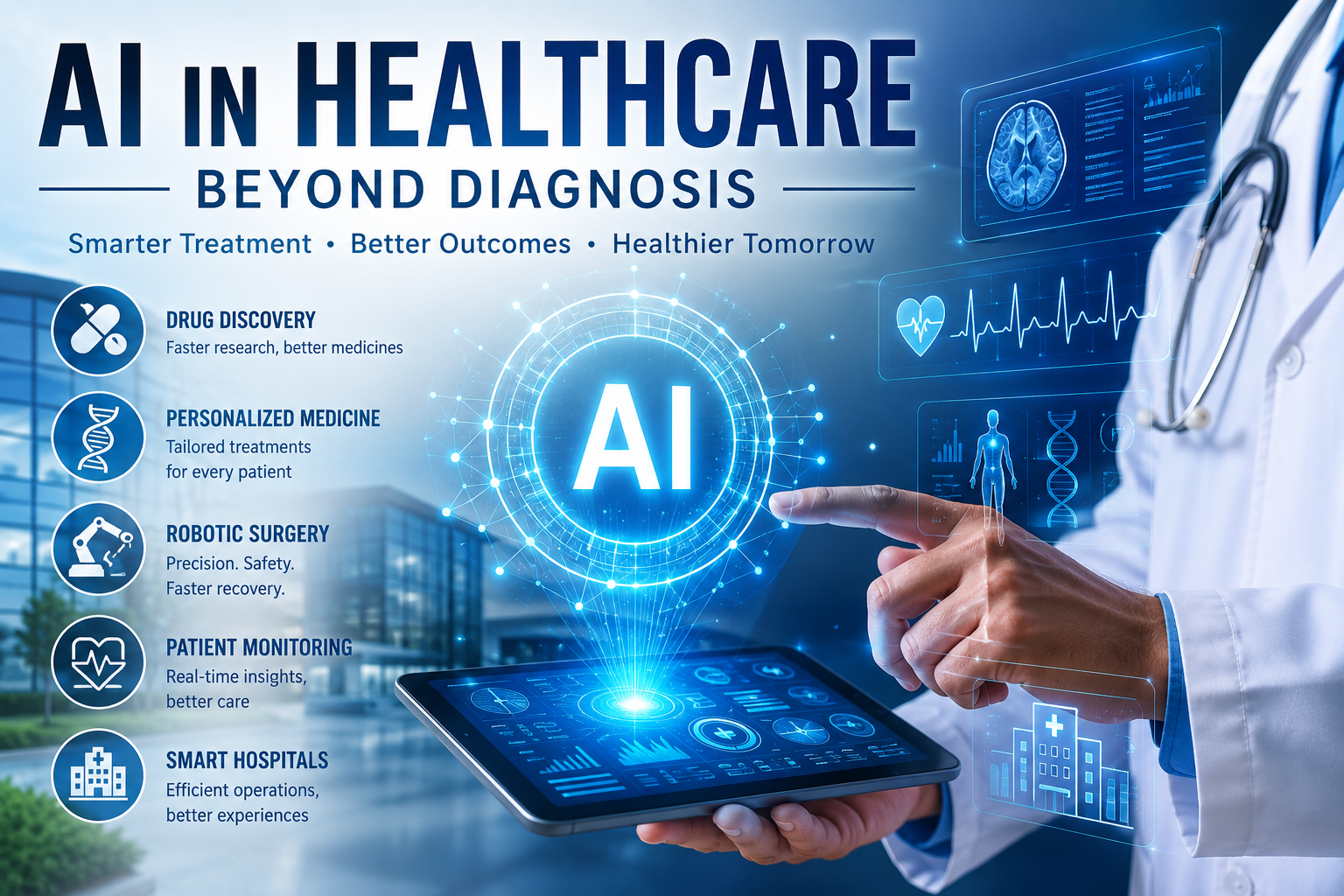
🏥 AI Chatbots in Healthcare


Healthcare providers use AI chatbots to enhance patient experiences and streamline communication.
Applications include:
- 📅 Appointment scheduling
- 💊 Medication reminders
- 🩺 Symptom information
- 📋 Administrative assistance
- 📖 Patient education
Healthcare chatbots can improve access to information, but they should complement—not replace—qualified medical professionals for diagnosis and treatment.
🎓 AI Chatbots in Education
Educational institutions increasingly integrate conversational AI into learning environments.
Benefits include:
- 📚 Personalized tutoring
- 📝 Homework assistance
- 🌍 Language learning
- 🎯 Study planning
- 📈 Learning progress support
Students can ask questions at any time and receive explanations tailored to their level of understanding.
🛒 AI Chatbots in E-Commerce
Online retailers use AI chatbots to improve the shopping experience.
Features include:
🛍️ Product recommendations
📦 Order tracking
💳 Payment assistance
🔄 Return guidance
🎁 Personalized offers
🛒 Shopping support
These services help customers find products faster while reducing the workload on customer support teams.
🏦 AI Chatbots in Finance
Financial institutions leverage AI chatbots for:
- 💰 Account information
- 📊 Budget guidance
- 💳 Transaction support
- 📈 Financial education
- 🔐 Security verification
When handling financial information, organizations implement strict privacy and security measures to protect users.
💻 AI Chatbots for Developers
Developers increasingly use AI assistants to:
- Write code
- Explain programming concepts
- Debug software
- Generate documentation
- Review code quality
- Learn new frameworks
These tools can speed up development, though human review remains important for accuracy and security.
🌍 Everyday Uses of AI Chatbots
AI chatbots assist with many daily activities:
📧 Drafting emails
✍️ Writing articles
📅 Planning schedules
🧳 Travel planning
🍳 Finding recipes
📖 Learning new topics
🌐 Translating languages
💡 Brainstorming ideas
They serve as versatile digital assistants across work, education, and personal life.
🔒 Privacy, Security, and Responsible AI
As AI chatbots become more capable, responsible development is essential.
Organizations should prioritize:
- 🔐 Data protection
- 👁️ Transparency
- ⚖️ Fairness
- 🛡️ Cybersecurity
- 📋 Regulatory compliance
- 🤝 Human oversight
Users should also avoid sharing sensitive personal or confidential information unless they trust the service and understand its privacy practices.
🌟 Benefits of AI Chatbots
Major advantages include:
✅ 24/7 availability
✅ Faster responses
✅ Lower operational costs
✅ Consistent communication
✅ Improved productivity
✅ Better customer experiences
✅ Scalable support
✅ Personalized interactions
These benefits make AI chatbots valuable for organizations of every size.
⚠️ Challenges and Limitations
Despite significant progress, AI chatbots still face challenges.
Common limitations include:
- Occasional inaccurate responses
- Difficulty with ambiguous requests
- Dependence on data quality
- Integration complexity
- Privacy concerns
- Potential bias in outputs
Organizations should monitor chatbot performance, provide clear escalation paths to human staff, and continuously improve their systems.
🚀 Future Trends
The next generation of AI chatbots is expected to feature:
🤖 More capable AI agents
🎙️ Natural voice conversations
🌍 Improved multilingual support
🧠 Better reasoning abilities
📱 Seamless cross-device experiences
🏠 Integration with smart homes
🚗 Support for connected vehicles
🏢 Deeper enterprise automation
Future chatbots will become increasingly collaborative, helping people complete complex workflows while working alongside human expertise.
💼 Best Practices for Businesses
Organizations planning to deploy AI chatbots should:
- Define clear objectives.
- Start with focused use cases.
- Integrate chatbots with existing systems where appropriate.
- Train employees to work effectively with AI.
- Protect customer data with strong security practices.
- Measure performance using customer satisfaction, resolution rates, and efficiency metrics.
- Regularly update and improve chatbot capabilities.
A thoughtful implementation strategy helps maximize value while maintaining user trust.
🌟 Conclusion
AI chatbots have become one of the most impactful applications of artificial intelligence, transforming how people interact with technology across industries. From customer service and education to healthcare, finance, and software development, conversational AI is helping organizations improve efficiency, reduce costs, and deliver better user experiences. 🚀
As natural language processing, machine learning, and generative AI continue to advance, AI chatbots will become even more intelligent, personalized, and capable of supporting increasingly complex tasks. While responsible development, transparency, and human oversight remain essential, the future of conversational AI is filled with exciting possibilities.
Whether you are a business leader, developer, educator, student, or technology enthusiast, understanding AI chatbots today prepares you for a future where intelligent conversational systems are an integral part of work, learning, and everyday life. The age of AI-powered conversation has arrived—and it is only just beginning. 🤖🌍✨