Artificial intelligence has changed the way people interact with technology. One of the most visible examples is the rise of AI chatbots—software systems that can communicate with users through natural language and assist with questions, information, writing, research, customer service, education, programming, and many other tasks.
Unlike traditional chatbots that depended heavily on fixed menus and predefined responses, modern AI chatbots can process context, interpret natural-language requests, generate responses, and adapt their output to different situations. This has made conversational AI an important part of modern digital experiences. 🚀
From websites and mobile applications to workplace platforms and educational tools, AI chatbots are becoming increasingly common. They can operate around the clock, handle large numbers of interactions, and provide personalized assistance at digital speed.
But understanding AI chatbots requires looking beyond impressive conversations. Their capabilities depend on data, language models, computing infrastructure, interface design, safety systems, and careful human oversight.


1. What Is an AI Chatbot? 🤖
An AI chatbot is a software application that uses artificial intelligence to interact with people through conversational language.
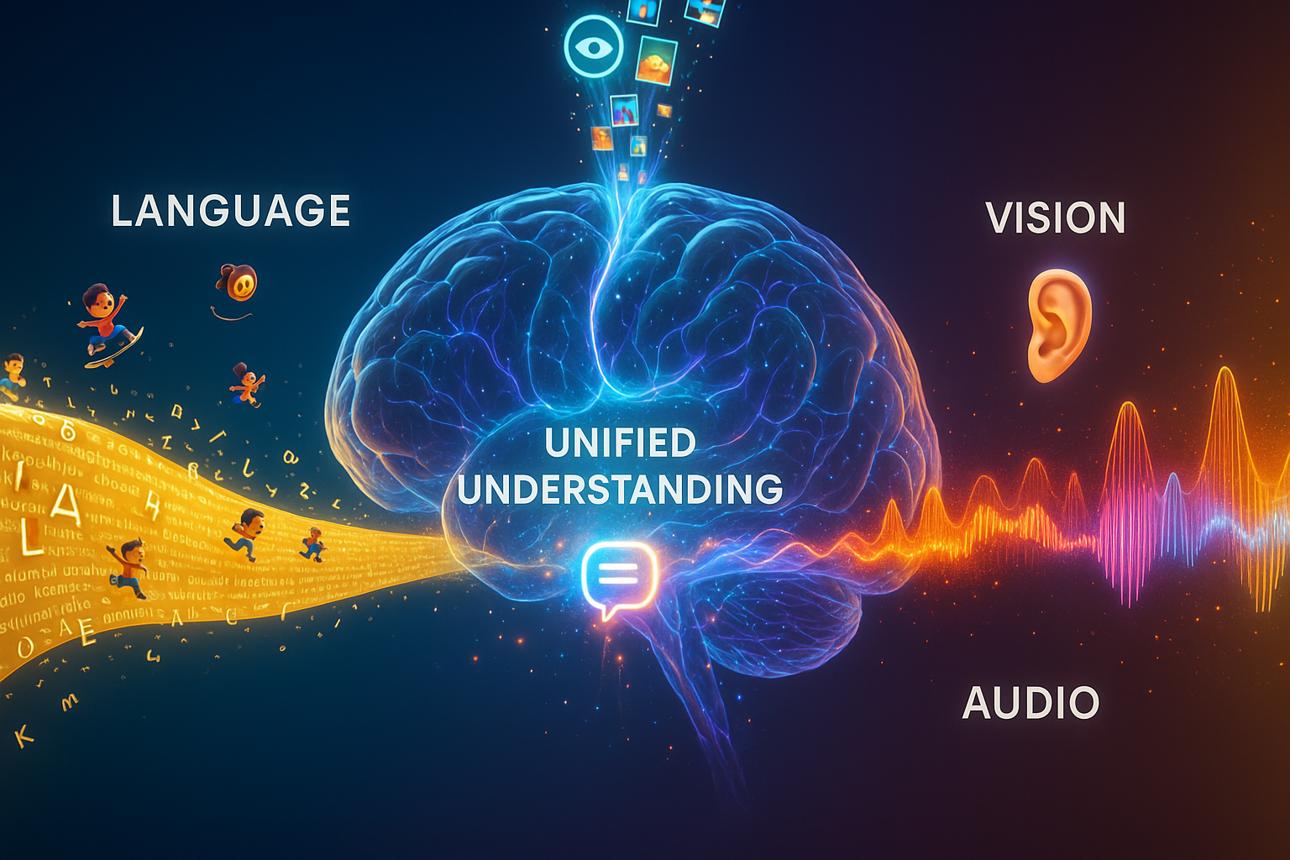
The interaction may happen through text, voice, or increasingly through multimodal interfaces that combine text, images, audio, and other forms of information.
Traditional chatbots often operated through predefined rules. For example, a basic customer-service bot might recognize the word “shipping” and provide a predetermined shipping-information page.
Modern AI chatbots can work differently. Instead of matching every message to a fixed response, they can use machine-learning models to interpret the user’s intent and generate an appropriate answer.
A user might ask:
“Can you explain this concept in simple language?”
The chatbot can formulate an explanation rather than simply selecting a sentence from a fixed database.
This flexibility is one of the major reasons conversational AI has attracted so much attention.
AI chatbots can assist with tasks such as:
- Answering questions
- Summarizing information
- Drafting messages
- Generating ideas
- Translating text
- Explaining technical concepts
- Helping with programming
- Supporting customer service
- Creating educational exercises
- Organizing information
However, an AI chatbot is not automatically an expert in everything. Its responses can contain mistakes, misunderstandings, outdated information, or unsupported claims.
Therefore, users should understand both its capabilities and its limitations.
2. How AI Chatbots Work ⚙️
Modern AI chatbots are typically powered by machine-learning models, particularly large language models for text-based conversation.
At a simplified level, a language model learns statistical relationships among tokens—units representing words or parts of words—by processing large amounts of training data.
When a user submits a prompt, the system analyzes the input and uses its learned patterns to generate a response.
A simplified chatbot workflow can be viewed as:
User input → Language processing → Model inference → Response generation → User interaction
There are many additional components behind this process.
A production chatbot may include:
- User authentication
- Conversation history
- Content filtering
- Retrieval systems
- External tools
- Databases
- Search systems
- Monitoring
- Analytics
- Security controls
Some chatbots can retrieve information from an organization’s internal documents before responding. Others can connect to external tools to perform specific actions.
This means the phrase “AI chatbot” can describe many different systems.
A simple chatbot might only generate text, while a sophisticated enterprise assistant might search documents, analyze files, call software tools, and produce structured reports.
The quality of a chatbot depends not only on the underlying model but also on how the entire system has been designed.
3. The Evolution of Chatbots 📈
Chatbots existed long before modern generative AI.
Early conversational programs used simple pattern matching. They could recognize certain phrases and respond according to programmed rules.
Later systems introduced more sophisticated natural-language processing and intent classification.
Customer-service bots became common on websites and messaging platforms. These systems helped users navigate frequently asked questions, order information, account support, and basic troubleshooting.
The emergence of large-scale language models significantly expanded what conversational systems could do.
Instead of responding only to predefined questions, generative AI systems can create new responses based on the context of the conversation.
This represents an important shift.
Traditional automation primarily asked:
“Which predefined answer matches this request?”
Generative conversational AI can instead attempt to answer:
“What response would best address this request given the available context?”
This does not mean modern chatbots are perfect. They still require evaluation, safeguards, and appropriate boundaries.
But the shift toward flexible language generation has opened opportunities across industries.
4. AI Chatbots in Customer Service 📞
Customer service is one of the most practical applications of conversational AI.
Companies receive large numbers of repetitive questions every day.
Customers may ask about:
- Opening hours
- Shipping
- Returns
- Product features
- Account procedures
- Order status
- Subscription details
- Basic troubleshooting
An AI chatbot can provide immediate assistance for many routine questions.
This can reduce the workload on human support teams and allow employees to concentrate on complex issues that require judgment or specialized knowledge.
A well-designed customer-service chatbot can also operate continuously, making support available outside traditional business hours.
However, successful customer-service automation requires careful design.
The chatbot should recognize when it cannot confidently solve a problem. Instead of repeatedly producing irrelevant responses, it should provide a clear path to human support.
For example, a customer dealing with a complicated billing dispute may need to speak with a trained representative.
The best systems therefore combine automation with human escalation.
The goal is not necessarily to eliminate human customer service. Instead, AI can handle routine interactions while people focus on situations requiring empathy, negotiation, or complex decision-making. 🤝


5. AI Chatbots and Education 🎓
Education is another area where AI chatbots can provide useful support.
Students frequently need explanations, examples, practice questions, and feedback.
An AI chatbot can act as a conversational study assistant by helping learners explore topics at their own pace.
For example, a student studying mathematics could ask for a simpler explanation of a difficult concept.
A language learner could practice conversations.
A programming student could ask for help understanding an error message.
A history student could request a summary of a particular topic.
The conversational format can make learning feel more interactive than simply reading static material.
AI chatbots can also help educators generate lesson ideas, discussion prompts, practice exercises, and preliminary drafts.
However, educational use should be guided by academic integrity and critical thinking.
Students should not treat chatbot responses as unquestionable answers.
AI systems can make factual mistakes. They can also provide explanations that appear convincing even when the underlying information is incorrect.
Teachers can help students develop AI literacy by encouraging them to verify information, compare sources, and understand how AI-generated content is produced.
The most useful educational chatbot is not necessarily one that gives an answer immediately.
Sometimes the better approach is to provide hints, questions, or step-by-step guidance that encourages the learner to think independently.
6. AI Chatbots in Healthcare 🏥
Healthcare is a sensitive area where conversational AI must be used carefully.
Chatbots can potentially help with administrative and informational tasks.
Examples include:
- Appointment information
- General health education
- Patient navigation
- Administrative questions
- Medication-information organization
- Preparation for healthcare visits
AI can also assist professionals by helping summarize documents or organize information.
However, health-related questions can involve significant risks.
An AI chatbot should not be treated as a substitute for qualified medical professionals, especially when a situation involves symptoms, diagnosis, emergencies, or treatment decisions.
A chatbot can misunderstand a user’s description or fail to recognize important context.
Privacy is another major consideration.
Healthcare information can be highly sensitive, so organizations need appropriate security and data-governance practices.
Responsible healthcare AI requires clear boundaries, human oversight, validation, and careful handling of personal information.
The technology can be valuable, but convenience should never come at the expense of patient safety.
7. AI Chatbots for Businesses 💼
Businesses are increasingly exploring conversational AI for internal and external applications.
An internal AI assistant can help employees find information in company documents, summarize reports, draft communications, or understand procedures.
For example, an employee might ask:
“Where can I find the latest expense policy?”
Instead of manually searching through multiple documents, an AI assistant could retrieve the relevant information and explain it conversationally.
Businesses can also build specialized assistants for sales, marketing, human resources, technical support, and operations.
A sales assistant might help organize customer information.
A marketing assistant might brainstorm campaign ideas.
An HR assistant might explain company policies.
A technical assistant might help employees troubleshoot common software issues.
These applications can reduce repetitive work and make organizational information easier to access.
But companies should carefully control access to sensitive information.
An AI assistant connected to internal systems must respect user permissions. Employees should not automatically receive access to confidential information simply because an AI model can retrieve it.
Security therefore becomes a fundamental part of enterprise chatbot design.
8. AI Chatbots and Personal Productivity ⏱️
AI chatbots can also function as personal productivity tools.
People can use conversational AI to organize ideas, rewrite text, brainstorm projects, summarize documents, and plan tasks.
The conversational interface makes it possible to refine a request through multiple interactions.
Instead of writing a perfect instruction immediately, users can start with a rough idea and progressively clarify what they need.
For example:
User: “Help me plan a presentation.”
Chatbot: “What is the topic and audience?”
User: “It is about AI for business executives.”
The conversation can then evolve into an outline, talking points, examples, and presentation notes.
This interactive process is different from traditional search because the user can continuously modify the request.
AI chatbots can also help users overcome the blank-page problem.
When someone has an idea but does not know where to begin, conversational AI can provide possible structures and directions.
The user remains responsible for evaluating and refining the final result.
In this sense, an AI chatbot can function as a digital brainstorming partner rather than simply an answer machine. 💡
9. Multimodal AI Chatbots 🖼️🎙️
The future of conversational AI is not limited to text.
Modern AI systems increasingly support multiple forms of input and output.
A multimodal chatbot may be able to work with:
- Text
- Images
- Audio
- Video
- Documents
- Charts
- Code
This creates new possibilities for interaction.
A user could upload an image and ask the chatbot to describe its contents.
Someone could provide a document and request a summary.
A developer could share a screenshot of an error and ask for help interpreting it.
Voice interaction can make AI assistants more natural for hands-free environments.
Multimodal systems are particularly interesting because human communication itself is multimodal.
People naturally combine speech, visual information, gestures, written words, and contextual cues.
As AI systems become better at processing multiple modalities, conversational interfaces may become more flexible and useful.


10. The Role of Natural Language Processing 🗣️
Natural Language Processing, or NLP, is a major foundation of conversational AI.
Human language is complicated.
The same sentence can have different meanings depending on context.
People also use abbreviations, slang, humor, metaphors, incomplete sentences, and domain-specific terminology.
NLP techniques help AI systems process and interpret language.
Modern language models have significantly improved the ability of machines to work with natural-language input.
They can recognize relationships between words, understand contextual patterns, generate coherent text, and adapt responses to different styles.
However, understanding language statistically is not identical to human understanding.
An AI chatbot can produce remarkably fluent language while still making reasoning or factual errors.
This distinction is important.
Fluency should not automatically be interpreted as accuracy.
Users should evaluate important information independently, particularly when decisions have financial, legal, medical, academic, or professional consequences.
11. Retrieval-Augmented AI Chatbots 🔎
One challenge with generative AI is that a model may not automatically know the latest information or an organization’s private information.
One solution is retrieval-augmented generation, often called RAG.
A RAG-based chatbot can retrieve relevant information from a knowledge source before generating an answer.
The process may look like:
Question → Search knowledge base → Retrieve relevant information → Generate response
For example, a company could connect a chatbot to internal documentation.
When an employee asks about a policy, the system can retrieve the relevant document and use that material to formulate the response.
This can make the chatbot more useful for specialized environments.
However, retrieval systems must also be designed carefully.
If the knowledge base contains outdated or incorrect information, the chatbot may reproduce those problems.
The retrieval process should therefore be monitored, and important information should be maintained regularly.
RAG illustrates an important principle of AI development: model intelligence is only one part of a complete AI application.
12. Benefits of AI Chatbots 🌟
AI chatbots offer several potential advantages.
24/7 Availability
A digital assistant can respond at any time without requiring a human operator to be online.
Scalability
One AI system can potentially support many simultaneous conversations.
Speed
Users can receive responses within seconds for many routine requests.
Personalization
Responses can be adapted to the user’s question, context, and communication style.
Automation
Repetitive tasks can be handled automatically.
Accessibility
Conversational interfaces can provide an alternative way to interact with digital information.
Productivity
Employees can use AI assistants to reduce time spent on repetitive writing, searching, and organization.
These advantages explain why conversational AI is being explored across so many industries.
Still, benefits depend on implementation quality. A poorly designed chatbot can frustrate users rather than help them.
13. Challenges of AI Chatbots ⚠️
AI chatbots also present significant challenges.
Incorrect Information
A chatbot may produce an answer that sounds convincing but is factually wrong.
Bias
AI systems can reflect biases present in their training data or development processes.
Privacy
Users may accidentally provide sensitive information to systems that are not designed to handle it.
Security
Chatbots connected to external tools or internal systems can introduce new security risks.
Overreliance
People may become too dependent on AI-generated answers and reduce their own critical evaluation.
Context Problems
A chatbot may misunderstand ambiguous requests or fail to recognize important details.
Lack of Human Empathy
Although chatbots can imitate conversational styles, they do not possess human experiences or emotions.
These limitations reinforce the importance of responsible deployment.
14. AI Chatbots and the Future of Work 👩💻
The workplace is likely to change as conversational AI becomes more capable.
Some repetitive tasks may become increasingly automated.
At the same time, new roles may emerge around AI implementation, evaluation, governance, prompt design, data management, security, and AI product development.
Workers may increasingly collaborate with AI systems rather than simply compete against them.
For example, a writer could use AI to brainstorm ideas while focusing human effort on storytelling and editing.
A programmer could use an AI assistant for routine code suggestions while concentrating on system architecture and testing.
A customer-service representative could receive AI-generated summaries before handling a complicated customer issue.
The future workplace may therefore involve a combination of human expertise and machine assistance.
The most valuable skills may include critical thinking, communication, creativity, domain expertise, problem-solving, and the ability to evaluate AI outputs.
AI literacy will become increasingly important across professions.
15. Designing Better AI Chatbot Experiences 🎯
Building a useful chatbot is not simply about selecting a powerful language model.
User experience matters.
A good chatbot should make it clear what it can do.
It should respond appropriately when it cannot answer a question.
It should avoid unnecessary complexity.
It should provide users with opportunities to correct misunderstandings.
For specialized applications, it should have access to reliable information sources.
Conversation history should be handled responsibly.
If the chatbot can perform actions—such as creating records, sending messages, or modifying information—those actions should include appropriate permissions and safeguards.
Organizations should also monitor chatbot performance after deployment.
Useful metrics might include:
- Response accuracy
- User satisfaction
- Resolution rate
- Escalation rate
- Response time
- Error frequency
- Safety incidents
Continuous evaluation helps developers identify weaknesses and improve the system over time.
16. Learning About AI Chatbots 🚀
For students and aspiring technology professionals, AI chatbots offer an exciting field of study.
A good starting point is understanding basic programming and data concepts.
Python is widely used in AI development, and learners can explore machine-learning frameworks and language-model APIs as they progress.
Important concepts include:
Natural Language Processing: Understanding how computers process language.
Machine Learning: Learning patterns from data.
Neural Networks: Computational models used by many AI systems.
Transformers: A highly influential architecture for language and multimodal models.
Prompt Engineering: Designing effective instructions for AI systems.
RAG: Connecting AI models with external knowledge sources.
AI Evaluation: Measuring whether an AI system performs reliably.
AI Safety: Reducing harmful, unreliable, or unintended behavior.
Practical projects can accelerate learning.
A beginner could build a simple question-answering assistant.
An intermediate learner might create a chatbot connected to a small document collection.
Advanced learners could explore model evaluation, tool integration, multimodal systems, or AI agents.
The field changes quickly, so continuous learning is particularly important.
17. Responsible Use of AI Chatbots 🌍
The future of conversational AI should emphasize responsibility as much as capability.
Users should understand that an AI chatbot generates responses based on learned patterns and available context. It does not automatically guarantee truth.
Important information should be verified through reliable sources.
Organizations should establish policies for sensitive information, employee use, data protection, and human oversight.
Developers should test systems for bias, security weaknesses, inappropriate outputs, and unexpected behavior.
Users should also understand when human assistance is necessary.
A chatbot can be extremely useful for brainstorming, explanation, organization, and many routine tasks. But important decisions may require qualified professionals.
Responsible use means recognizing both sides of the technology:
AI can be powerful. AI can also be wrong.
Understanding that distinction is one of the most important elements of AI literacy.
18. The Future of AI Chatbots 🔮
The next generation of AI chatbots is likely to become more capable, personalized, multimodal, and integrated with digital tools.
Instead of simply answering questions, future assistants may coordinate multiple tasks.
A user might ask an AI system to research a topic, organize information, prepare a report, analyze a dataset, and create a presentation.
AI assistants may also become increasingly specialized.
A healthcare assistant, coding assistant, education assistant, financial research assistant, and engineering assistant may each be designed around different knowledge domains and safety requirements.
Voice interaction could become more natural.
Multimodal systems could allow users to interact through combinations of text, images, speech, and documents.
AI agents may also become more capable of carrying out multi-step workflows.
However, greater capability makes governance even more important.
The more actions an AI system can perform, the more important it becomes to control permissions, verify outputs, monitor behavior, and maintain clear human accountability.
The future of AI chatbots will therefore involve not just smarter models, but smarter system design.
Conclusion: AI Chatbots and the New Era of Digital Conversation ✨🤖
AI chatbots are transforming the relationship between people and software.
Instead of navigating complicated menus or learning rigid commands, users can increasingly communicate with technology using ordinary language.
This simple change has enormous implications.
AI chatbots can support customer service, education, business operations, research, programming, productivity, and creative work. Multimodal systems are expanding these possibilities by allowing AI to process text, images, audio, documents, and other information.
Yet the technology should be approached thoughtfully.
AI chatbots can make mistakes, misunderstand context, reproduce bias, and generate inaccurate information. Privacy, security, transparency, and human oversight therefore remain essential.
The most valuable approach is not to view AI chatbots as magical replacements for human intelligence.
Instead, they should be understood as increasingly sophisticated tools that can extend human capabilities.
When people combine AI assistance with human judgment, creativity, expertise, and critical thinking, conversational technology can become a powerful partner in solving problems and exploring new possibilities.
As AI continues to evolve, the question is no longer simply whether computers can communicate with people.